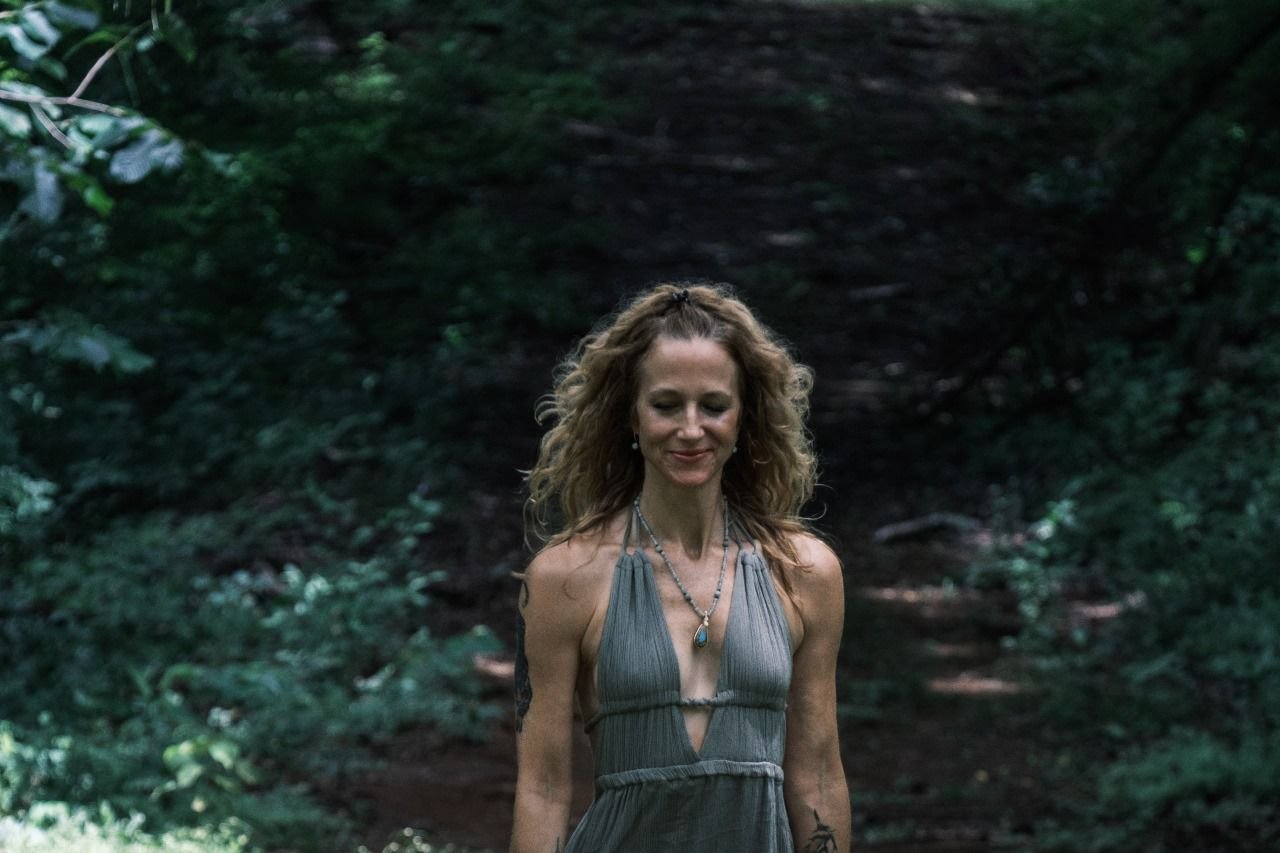
Grounding is one of those words that gets used a lot in wellness spaces, and yet it points to something genuinely important. At its simplest, grounding is the practice of coming back into your body and back into the present moment. It is the antidote to the particular kind of scattered, anxious, nowhere-near-now feeling that so many of us carry as a baseline.
The five practices I am sharing here are ones I return to regularly. They are not complicated. They do not require equipment or training. What they do require is a willingness to slow down, which, for many of us, is the hardest part.
1. The Body Scan
This is perhaps the most foundational grounding practice available. It asks only that you turn your attention toward your own body, which is always here, always now, always a doorway back to the present moment.
Lie down or sit comfortably. Close your eyes. Begin at the top of your head and let your attention move slowly downward through your body, noticing whatever is present. Sensations, tension, warmth, numbness, tingling. You are not trying to change anything. You are simply noticing.
Move through your head and face, your neck and shoulders, your chest and upper back, your arms and hands, your abdomen, your lower back and hips, your legs, and finally your feet. At each area, pause for a breath. Notice. Move on.
Five minutes of this practice can genuinely shift your state. Ten minutes can feel transformative. It is a way of coming back to yourself when the world has pulled you too far from your center.
2. Breath as Anchor
The breath is unique among all bodily functions in that it happens automatically, but we can also control it. This makes it a bridge between the involuntary nervous system and conscious intention, which means it is one of the most powerful grounding tools we have.
Sit comfortably. Place one hand on your chest and one on your belly. Take a breath and notice which hand moves more. Now, without forcing, see if you can breathe so that the belly hand rises first. This is diaphragmatic breathing, and it directly activates the parasympathetic nervous system.
Breathe in for four counts. Hold gently for two. Breathe out slowly for six or eight. Repeat five times. This is the practice. Simple, free, always available, and more powerful than it sounds.
The breath is the one thing that is always with you. It is always now. When you return to it, you return to yourself.
3. A Barefoot Nature Walk
There is a body of research on earthing, the practice of physical contact with the ground, showing measurable effects on inflammation, cortisol levels and nervous system regulation. But you do not need the research to know this intuitively. Most of us feel something shift when we take our shoes off and stand on grass or earth or sand.
Take a slow walk outdoors. Leave your phone behind if you can, or at least put it away. Walk without a destination or a pace. Let your eyes move softly rather than focusing tightly on any one thing. Notice what you can smell. Notice the temperature and texture of the air. Notice the quality of the light.
Bring a plant ally with you if you like. A small piece of fresh rosemary to crush between your fingers, or a tulsi leaf. The combination of movement, nature and botanical scent works on the nervous system in ways that are genuinely nourishing.
4. The Grounding Journal Prompt
Journalling is most effective as a grounding practice when it is oriented toward the present rather than the past or future. Many of us use journals to process, which has its place, but processing can sometimes keep us spinning in the same thoughts.
Try this prompt instead: What is actually true right now? Not what you are worried about, not what happened yesterday, not what might happen tomorrow. Right now, in this moment, what is actually, demonstrably true?
Write whatever comes. You might find yourself noting that you are physically safe, that the room is warm, that there is food in the kitchen, that the people you love are okay. This practice interrupts catastrophic thinking by returning attention to present reality, which is usually far more manageable than the stories the mind constructs about it.
5. The Tea Ceremony
I saved this one for last because it is my personal favourite. The tea ceremony is not about the tea. It is about the act of making something with full attention, and then receiving it fully.
Choose a herb that speaks to you, chamomile, tulsi, rose, lemon balm, or a blend you love. Boil water. Watch it. Place the herbs in the pot or cup. Watch them steep. Notice the color changing, the scent rising. Pour slowly. Hold the cup in both hands before you drink and feel its warmth. Take the first sip before you add anything to it.
The ritual is the point. The slowing down, the sensory engagement, the act of care directed toward yourself. Five minutes of this kind of attention can anchor you in your body more effectively than an hour of anxious scrolling ever could.
A Note on Consistency
None of these practices works from a single encounter. The nervous system learns through repetition. The goal is not to do all five every day. The goal is to choose one, return to it regularly, and let it become a genuine anchor in your life.
Start with whatever called to you as you read. That calling is already information.
The Full Grounding Guide Is Yours, Free
Download the Grounding and Plant Ally Ritual Guide for an expanded version of these practices plus three plant allies to work with alongside them.
Download the Free Guide